When you look at a stained, grimy driveway or a walkway mottled with dark patches of mold, you’re not just seeing an aesthetic problem. You’re looking at a surface that has become a hazard and a slow-burning maintenance nightmare. A true, professional concrete wash is about far more than blasting away dirt. It’s a methodical process that demands the same kind of situational awareness, safety-first mindset, and systematic execution that a firefighter-paramedic brings to an emergency call. In North Georgia’s humid, pollen-heavy environment, concrete surfaces are constantly under siege, and a half-hearted rinse with a homeowner-grade pressure washer simply won’t restore them. Understanding what goes into a deep, restorative concrete wash can save you thousands of dollars in premature resurfacing, prevent slip-and-fall accidents, and bring back the crisp, welcoming look your property deserves.
The Unseen Hazards of Neglected Concrete—More Than Just a Cosmetic Problem
Most people think a dirty driveway or a green-tinged patio is just an eyesore. The reality is far more serious. When concrete is left to accumulate organic growth, oil drips, and mineral deposits, the surface undergoes a silent deterioration that compromises both safety and structural integrity. The thin, nearly invisible biofilm created by algae, moss, and lichen doesn’t just sit on top of the concrete—it begins to burrow into the microscopic pores. Every time it rains or the sprinklers run, that organic layer becomes slicker than ice, turning walkways and pool decks into genuine slip hazards. For a professional who also works as a first responder, these hazards are impossible to ignore; they’re exactly the kind of preventable accidents that lead to emergency calls.
Beyond the immediate danger of a fall, there’s a slow decay at work. Concrete is naturally porous and alkaline. When acidic tree sap, bird droppings, or decomposing leaves soak into the surface, they gradually lower the pH and soften the cement paste that binds the aggregate together. Over time, this chemical erosion leads to pitting, spalling, and hairline cracks that widen with freeze-thaw cycles—something we see often during North Georgia’s unpredictable winters. A proper concrete wash isn’t just cosmetic restoration; it’s a process that neutralizes these corrosive agents and halts the microscopic damage before it turns into a costly replacement. If you’ve ever run your hand over a rough, flaking section of driveway and wondered what caused it, the answer is almost always a lack of regular, thorough cleaning.
Stains on concrete are also diagnostic. Black and green discoloration signals active organic colonies. Rust-colored patches near sprinkler heads point to high iron content in well water, which embeds itself into the surface and creates permanent staining if not flushed out with the right chelating agents. Heavy tire marks and oil drips on a driveway aren’t just ugly; they trap moisture against the concrete, accelerating freeze-thaw damage in winter. A neglected concrete walkway becomes a sponge for everything from pesticides to pollen, and that chemical soup stays active. Understanding these hidden dynamics is what separates a surface-level rinse from a genuinely protective concrete wash that resets the deck and defends it against future buildup.
Inside a Professional Concrete Wash: The Tools, Detergents, and Techniques That Make the Difference
A common misconception is that all pressure washing is the same—just point a high-powered wand and pull the trigger. In reality, a skilled concrete wash is a calibrated sequence of steps that tailors temperature, pressure, chemistry, and dwell time to the specific condition of each slab. The first thing a trained crew does is assess the surface: Is the concrete stamped, exposed aggregate, or smooth-finished? Are there existing cracks, loose aggregate, or previous sealers that have failed? That on-scene size-up is second nature to a professional who has spent years making rapid, accurate assessments in emergency situations. This kind of disciplined evaluation prevents the all-too-common mistake of using excessive pressure that etches the cream layer off the concrete, leaving it permanently rough and even more prone to dirt adhesion.
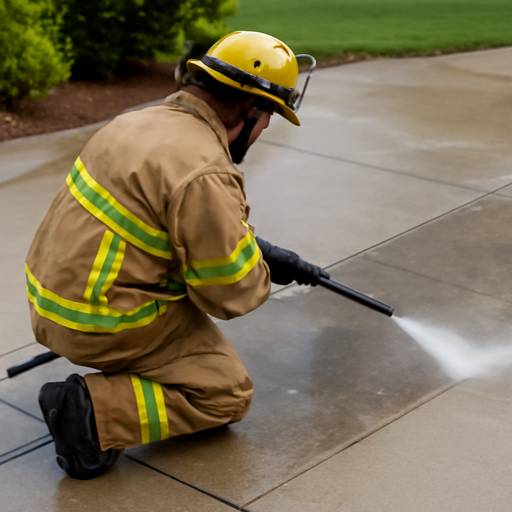
Once the assessment is done, the real work begins with pre-treatment. Professional-grade sodium hypochlorite solutions—often blended with surfactants and stabilizers—are applied at low pressure. This starts breaking down the organic colonies, killing mold and algae at the root instead of just scattering the surface growth. For heavy oil spots, a degreasing agent is worked in with a stiff brush. In many cases, hot water is used to emulsify stubborn petroleum-based stains and lift years of embedded tire rubber from driveways. Professionals who also serve as first responders bring an extra layer of care to every Concrete wash, treating each surface as if it were a critical scene—no corner is skipped, and every cleaning solution is given the proper dwell time to fully activate before the rinse phase begins.
The rinse itself is where experience really matters. A commercial-grade surface cleaner—essentially a contained, rotating spray bar that rides on the concrete—delivers uniform cleaning at a much lower effective PSI than a pinpoint turbo nozzle. This prevents zebra striping and the kind of pattern etching that comes from an unsteady hand. For softer or older concrete, technicians may switch to a higher-flow, lower-pressure rinse that flushes the pores without damaging the surface. Post-rinse, many professionals recommend applying a high-quality penetrating sealer while the concrete’s pores are open and clean. This step locks out future moisture, oil, and organic penetration, making subsequent concrete wash sessions even easier and extending the life of the slab. It’s a comprehensive, multi-step process that simply can’t be replicated by a rental machine from a hardware store—and it’s the reason why informed homeowners seek out crews who treat concrete cleaning as a specialized trade rather than a weekend chore.
How a Routine Concrete Wash Schedule Saves Money and Extends Surface Life—Plus Local Insights for Hall County
Waiting until your concrete looks bad enough to need cleaning is like waiting until the smoke alarm goes off before thinking about fire safety. A proactive concrete wash schedule transforms the long-term economics of property maintenance. Industry experience in this region points to an optimal frequency of every 8 to 12 months for most driveways, walkways, and patios. That timing isn’t arbitrary; it reflects the seasonal cycles of pollen, humidity, and organic debris that define life in Hall County. After spring’s yellow blanket of pine pollen and the wet, humid summer that fuels rampant algae growth, concrete surfaces are chemically active and saturated with spores. An annual or semi-annual cleaning in early summer or fall removes that corrosive film before it can etch into the surface, effectively resetting the clock on premature wear.
Financially, the math is straightforward. The average cost of replacing a concrete driveway in North Georgia ranges from $4,000 to $8,000 or more, depending on square footage and finish. A series of professional washings over a decade, combined with the optional sealing, totals a fraction of that replacement cost—yet it can easily double the functional lifespan of the concrete. Regularly cleaned concrete also repels oil and grease more effectively because the surface pores haven’t been permanently clogged with oxidized organic matter that traps contaminants. This means those ugly oil spots from the family car or the delivery truck won’t set into a permanent stain in just a few weeks. Instead, they remain closer to the surface where they can be lifted during the next scheduled cleaning.
Local conditions in Hall County make this routine especially critical. The clay-heavy soil that gives so much character to our landscape works its way onto driveways and walkways with every rain, leaving behind a fine red film that is remarkably difficult to remove once it bakes in the sun. Our region’s mix of mature hardwood trees means a constant rain of leaves, acorns, and sap that stain and feed fungal growth. Even irrigation water drawn from local wells often carries dissolved minerals that create efflorescence—a white, chalky residue that signals moisture wicking through the concrete. A crew that knows these local variables doesn’t just clean the surface; they anticipate the specific cocktail of stains that makes Hall County concrete unique. They’ll adjust detergents to handle red clay tannins, apply the right dwell time for humidity-trapped mold, and schedule follow-ups to match the seasonal drop of pine straw and pollen. The result is a home exterior that stays visibly cleaner, safer underfoot, and structurally sound through every North Georgia season.

Lagos fintech product manager now photographing Swiss glaciers. Sean muses on open-banking APIs, Yoruba mythology, and ultralight backpacking gear reviews. He scores jazz trumpet riffs over lo-fi beats he produces on a tablet.